


β-Lactam Antibiotics: Mechanism of Action & Resistance (High-Yield Review)
β-lactam antibiotics are among the most commonly used antimicrobial agents in clinical medicine. This class includes penicillins, cephalosporins, carbapenems, and monobactams, all of which share a common β-lactam ring and a shared mechanism of action.
This post reviews:
- How β-lactams work
- The four major mechanisms of resistance
- Key penicillin subclasses and their clinical spectrum
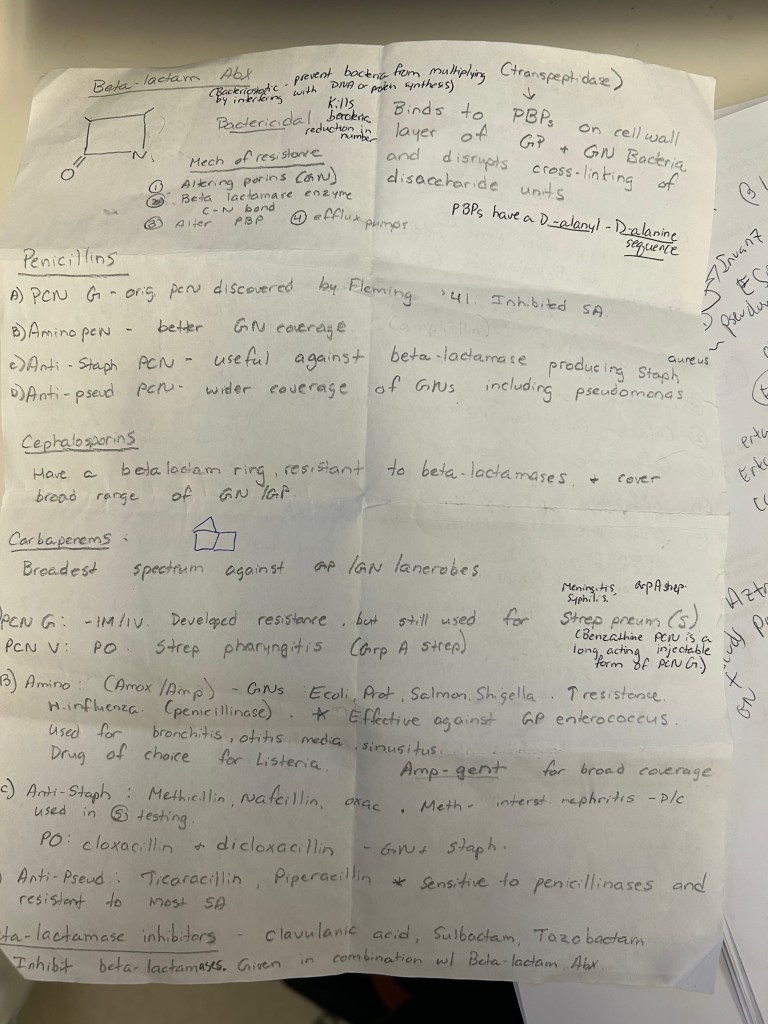
Mechanism of Action of β-Lactam Antibiotics
β-lactam antibiotics work by inhibiting bacterial cell wall synthesis.
- They bind to penicillin-binding proteins (PBPs)
- PBPs function as transpeptidases responsible for cross-linking peptidoglycan chains
- Inhibition prevents proper cell wall formation, leading to cell lysis
This mechanism is effective against both Gram-positive and Gram-negative bacteria, depending on drug structure and permeability.
Key molecular feature:
PBPs contain a serine-based active site motif (SXXK) that binds the β-lactam ring.
The Four Major Mechanisms of β-Lactam Resistance
Bacteria can develop resistance to β-lactams through four primary mechanisms:
1. Altered Porins (Decreased Drug Entry)
- Primarily affects Gram-negative bacteria
- Loss or mutation of outer membrane porins reduces antibiotic penetration
- Common in organisms such as Pseudomonas aeruginosa and Enterobacterales
2. β-Lactamase Production
- Bacterial enzymes that hydrolyze the β-lactam ring
- Inactivates the antibiotic before it can bind PBPs
- Includes:
- Penicillinases
- Extended-spectrum β-lactamases (ESBLs)
- AmpC β-lactamases
- Carbapenemases
This is the rationale for combining β-lactams with β-lactamase inhibitors such as clavulanate or tazobactam.
3. Altered Penicillin-Binding Proteins (PBPs)
- Structural modification of PBPs reduces antibiotic binding affinity
- Leads to functional resistance even when the drug reaches its target
- Classic examples:
- MRSA → altered PBP2a
- Streptococcus pneumoniae → mosaic PBPs
4. Efflux Pumps
- Active transport systems that pump antibiotics out of the bacterial cell
- Common in Gram-negative organisms
- Often works synergistically with porin loss
Penicillin Subclasses and Spectrum of Activity
Penicillin G
- First penicillin, discovered by Alexander Fleming
- Strong activity against Gram-positive organisms
- Limited Gram-negative coverage
- Susceptible to β-lactamases
Aminopenicillins (Ampicillin, Amoxicillin)
- Improved Gram-negative coverage
- Retain Gram-positive activity
- β-lactamase sensitive → commonly paired with inhibitors
Antistaphylococcal Penicillins (Nafcillin, Oxacillin)
- Resistant to staphylococcal β-lactamase
- Used for MSSA
- No Pseudomonas or significant Gram-negative coverage
Antipseudomonal Penicillins (Piperacillin, Ticarcillin)
- Broad Gram-negative coverage, including Pseudomonas
- Also cover many Gram-positives and anaerobes
- Typically combined with β-lactamase inhibitors
Take-Home Summary
β-lactam antibiotics inhibit penicillin-binding proteins, preventing peptidoglycan cross-linking. Resistance develops through altered porins, β-lactamase production, altered PBPs, or efflux pumps.
Penicillins & Cephalosporins: Spectrum, Uses, and Key Clinical Pearls
β-lactam antibiotics include penicillins and cephalosporins, which share a β-lactam ring and act by inhibiting penicillin-binding proteins (PBPs) involved in bacterial cell wall synthesis. Differences in structure determine spectrum, resistance, and clinical use.
Cephalosporins: Overview
- Contain a β-lactam ring that is more resistant to many β-lactamases than penicillins
- Provide broad Gram-positive and Gram-negative coverage
- Spectrum generally expands toward Gram-negative organisms with higher generations
- Limited activity against Enterococcus, Listeria, and atypicals
Penicillin G
- Can be given intravenously or intramuscularly
- Still clinically useful despite resistance
- Effective against:
- Group A Streptococcus (GAS) – pharyngitis, meningitis
- Streptococcus pneumoniae (penicillin-sensitive strains)
- Treponema pallidum (syphilis)
Penicillin V (Oral)
- Oral formulation of penicillin
- Commonly used for:
- Strep pharyngitis (Group A Strep)
Benzathine Penicillin G
- Long-acting injectable form of penicillin G
- Used for:
- Syphilis
- Rheumatic fever prophylaxis
Aminopenicillins: Amoxicillin & Ampicillin
Spectrum
- Expanded Gram-negative coverage compared to penicillin G
- Covers:
- E. coli
- Proteus
- Salmonella
- Shigella
- Haemophilus influenzae (resistance common)
Clinical Uses
- Amoxicillin
- Otitis media
- Sinusitis
- Bronchitis
- Ampicillin
- Drug of choice for Listeria monocytogenes
- Often combined with gentamicin for synergistic coverage (e.g., meningitis, endocarditis)
Antistaphylococcal Penicillins
Includes:
- Methicillin (historical)
- Nafcillin
- Oxacillin
- Dicloxacillin / Cloxacillin (oral options)
Key Points
- Resistant to staphylococcal β-lactamase
- Used for MSSA infections
- Limited Gram-negative coverage
- Methicillin is no longer used clinically but is used in susceptibility testing
Adverse Effect
- Acute interstitial nephritis → discontinue if suspected
Antipseudomonal Penicillins
Examples:
- Piperacillin
- Ticarcillin
Spectrum
- Broad Gram-negative coverage, including Pseudomonas aeruginosa
- Active against many Gram-positives and anaerobes
- Generally resistant to many staphylococcal β-lactamases, but not MRSA
β-Lactamase Inhibitors
Examples:
- Clavulanic acid
- Sulbactam
- Tazobactam
Mechanism
- Inhibit β-lactamase enzymes
- Protect the accompanying β-lactam antibiotic from degradation
Always Given in Combination
- Amoxicillin–clavulanate
- Piperacillin–tazobactam
- Ampicillin–sulbactam
Take-Home Summary
Penicillins and cephalosporins inhibit PBPs to block bacterial cell wall synthesis. Cephalosporins offer broader Gram-negative coverage and increased β-lactamase resistance, while penicillin subclasses are tailored for specific organisms and clinical settings. β-lactamase inhibitors extend activity when resistance is present.
β-Lactam / β-Lactamase Inhibitor Combinations & Cephalosporins: A Clinical Guide
β-lactam antibiotics are often paired with β-lactamase inhibitors to overcome bacterial resistance. Cephalosporins further expand coverage through structural modifications that increase stability and spectrum.
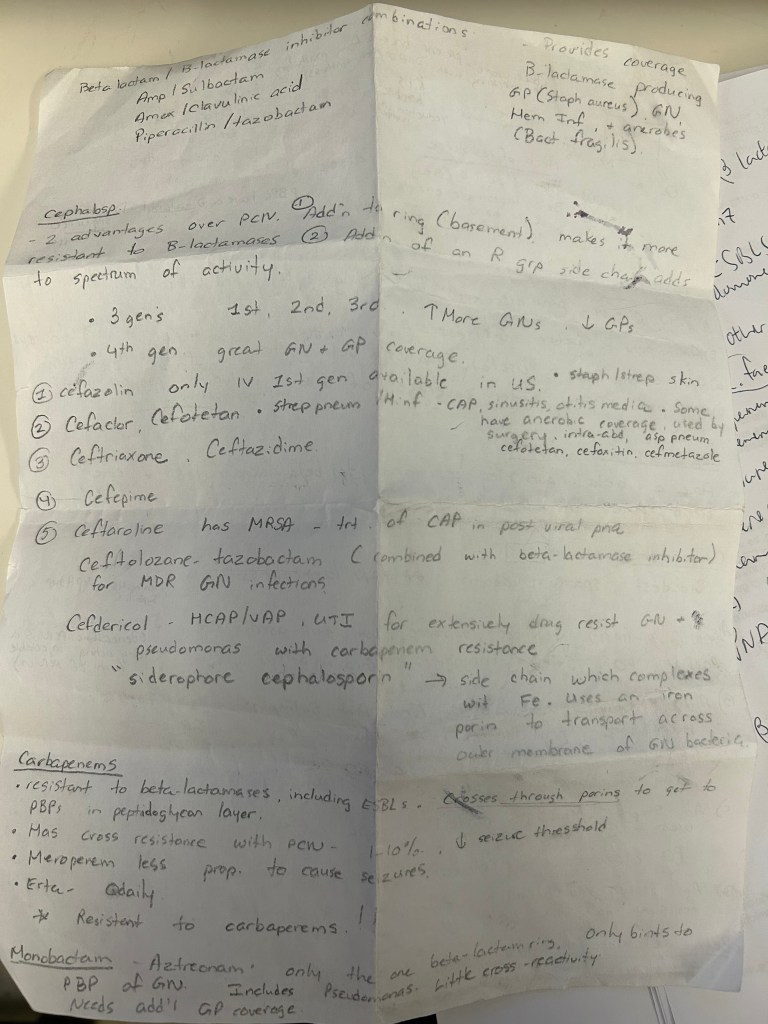
β-Lactam / β-Lactamase Inhibitor Combinations
β-lactamase inhibitors do not have significant antibacterial activity on their own. Instead, they protect the β-lactam antibiotic from enzymatic degradation.
Common Combinations
- Ampicillin–sulbactam
- Amoxicillin–clavulanate
- Piperacillin–tazobactam
What They Cover
- β-lactamase–producing Gram-positive Staphylococcus (MSSA)
- β-lactamase–producing Gram-negative organisms
- Haemophilus influenzae
- Neisseria species
- Anaerobes
These combinations are commonly used for:
- Skin and soft tissue infections
- Intra-abdominal infections
- Aspiration pneumonia
- Community-acquired infections with resistance concerns
Cephalosporins: Advantages Over Penicillins
Cephalosporins have two major advantages over penicillins:
- Increased resistance to β-lactamases
- Expanded spectrum of activity, especially Gram-negative organisms
This is due to:
- Modification of the β-lactam ring
- Addition of side chains that enhance penetration and stability
Cephalosporin Generations (High-Yield)
General Rule
- Higher generations → more Gram-negative
- Earlier generations → more Gram-positive
Second-Generation Cephalosporins
Example:
- Cefuroxime
Coverage & Uses:
- Streptococcus pneumoniae
- Haemophilus influenzae
- Community-acquired pneumonia
- Sinusitis
- Otitis media
📌 Some second-generation agents have anaerobic coverage, making them useful in:
- Surgical prophylaxis
- Abdominal and pelvic infections
Third-Generation Cephalosporins
Examples:
- Ceftriaxone
- Ceftazidime (Pseudomonas)
Coverage:
- Strong Gram-negative activity
- Less Gram-positive than earlier generations
Common Uses:
- Severe community-acquired infections
- Meningitis
- Sepsis
Fourth-Generation Cephalosporins
Example:
- Cefepime (IV only in the U.S.)
Coverage:
- Gram-positive AND Gram-negative
- Pseudomonas aeruginosa
- More β-lactamase resistant
Used for:
- Hospital-acquired pneumonia
- Severe sepsis
Fifth-Generation Cephalosporins
Example:
- Ceftaroline
Key Feature:
- Only cephalosporin with MRSA coverage
Used for:
- Community-acquired pneumonia
- Post-viral pneumonia
- Skin and soft tissue infections
Advanced Cephalosporins for Resistant Gram-Negative Infections
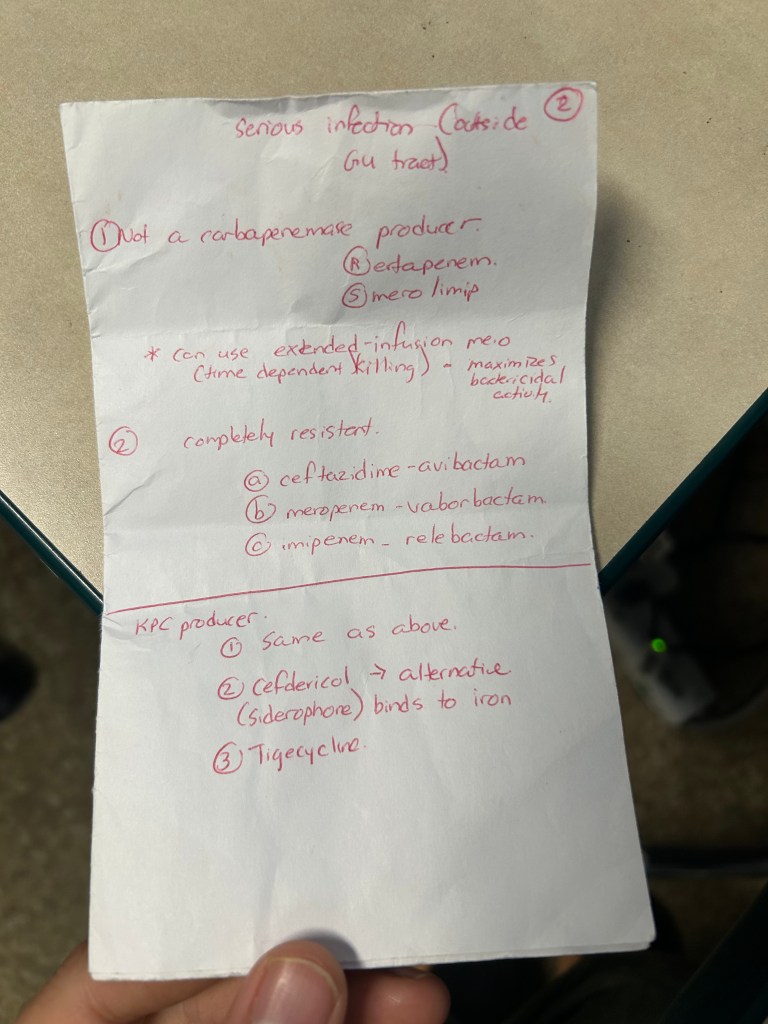
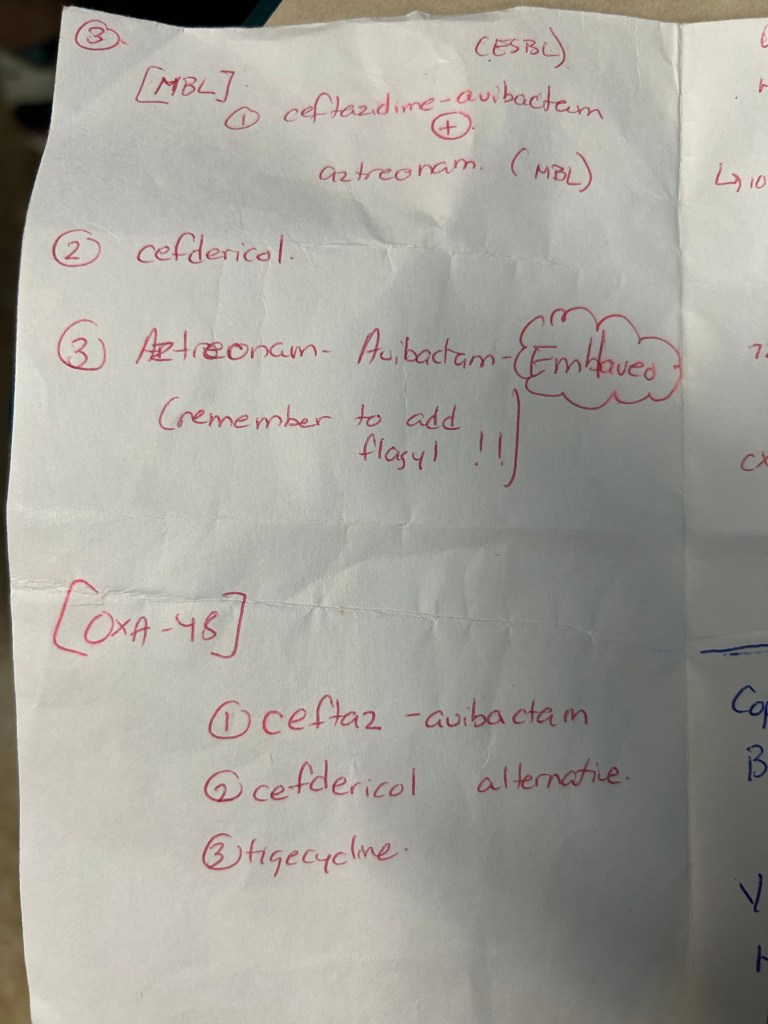
Ceftazidime–Avibactam
- Combined with a β-lactamase inhibitor
- Used for multidrug-resistant Gram-negative infections
- Indications:
- Hospital-acquired pneumonia
- Ventilator-associated pneumonia
- Complicated UTIs
Cefiderocol (Siderophore Cephalosporin)
- Has a siderophore side chain
- Binds iron and uses bacterial iron transport systems to cross the outer membrane
- Highly resistant to:
- ESBLs
- Carbapenemases
Used for:
- Extensively drug-resistant Gram-negative organisms
- Carbapenem-resistant Pseudomonas
Carbapenems (Brief Note)
- Broadest β-lactam spectrum
- Cross the outer membrane efficiently
- Resistant to most β-lactamases
⚠️ Adverse effect:
- Decreased seizure threshold, especially with imipenem
- Meropenem has less seizure risk
Monobactams
Example:
- Aztreonam
Key Features:
- Only β-lactam in its class
- Binds PBPs of Gram-negative bacteria only
- Covers Pseudomonas
- Minimal cross-reactivity with penicillin allergy
📌 Requires additional Gram-positive coverage
Take-Home Summary
β-lactam/β-lactamase inhibitor combinations extend activity against resistant organisms, while cephalosporins expand Gram-negative coverage through structural modifications. Advanced agents like cefiderocol and ceftazidime–avibactam target multidrug-resistant Gram-negative infections in hospital settings.
 Samuel Y. Huang, MD | Pulmonary & Critical Care
Leave a comment